
Introduction Ledger 3
Resonance: A Light that Fundamentally Alters the Soul
6 min read
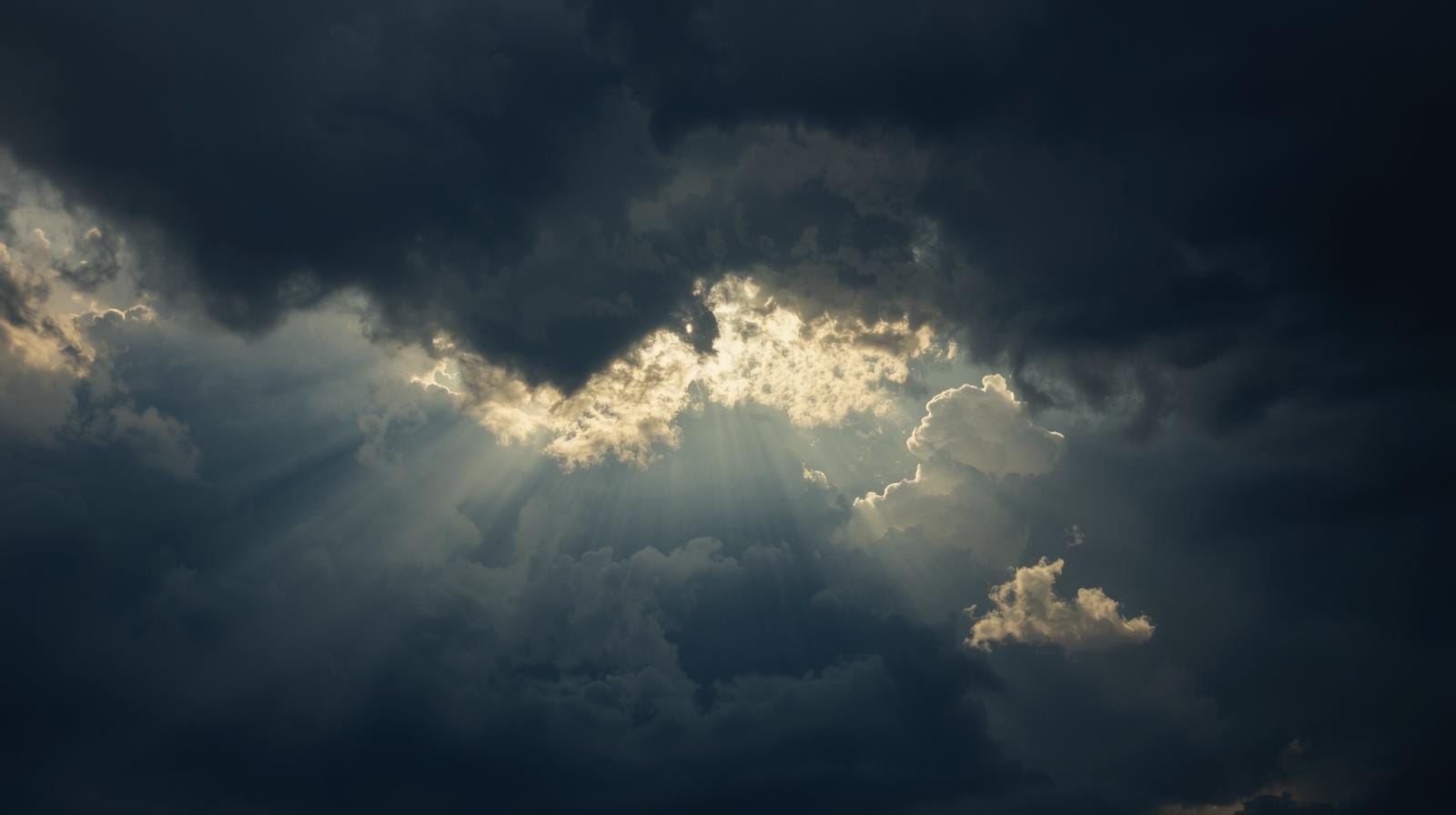
We have sentenced ourselves to a slow, lonely, and agonizing death within our own helpless society. We have decided to drown in our own despair and rot in our potentiality. It seems not only incomprehensible for a better society to come to fruition, but even to imagine a better society. Why have we chosen a curse instead of a blessing? What has happened to get us here?
Simply put, we rejected hope through embracing modernity because modernity appears hopeless. Modernity appears hopeless for many reasons, but the biggest contributor was and is social media. With the rise of social media, distance grew between the individual and others, and between the individual and institutions. It became clear that there was so much going on beyond our grasp, and so much going on that is out of our control. This is true. But it was always true. It was always true that millions of people, billions of tasks, and thousands of institutions are doing things that we do not see, that we do not know, and that are out of our direct control. Social media inadvertently promoted the illusion that there was some type of control before that we somehow lost. However, we never controlled everything. It was only in modernity that this illusion developed. Hartmut Rosa’s The Uncontrollability of the World most eloquently defines this struggle with control over our world in the face of modernity. “Modernity is focused on everything must be known, mastered, conquered, and made useful” (Rosa, 6). In other words, it must be controlled or made controllable. Though most of the world is not controllable and is beyond our control. This is okay, and that is good. If we were controlling everything, most things would not function properly, and we would be overwhelmed with how much truly goes on day-to-day.
In an attempt to understand controllability and how it has blinded mankind in modernity, Rosa outlines four dimensions of control. First things must be visible or expand our knowledge of what something is. Second, it must be reachable or accessible, whether accessible by rockets to the moon, cars across the country, or submarines to the bottom of the sea. Third, it must be manageable through new technology, infrastructure, or political and administrative structures. Finally, it must be useful: “What is there, what is present is instrumentalized, transformed into the material and the object of our own projections and desires” (Rosa, 17). This has become the mantra of modernity, and the standard against which everything is tested. It must be beneficial, it must serve a purpose, it must serve something. Modernity has abandoned anything for its own intrinsic sake. (This very Ledger is a rejection of Modernity, insofar as it serves no other purpose than the pursuit of the true, the good, and the beautiful). The necessity of control has deprived us of hope and has thrown mankind into the abyss of anxiety. There is constant fear of things beyond our control and things occurring without us.
Rosa calls for a new radical outlook towards the world through resonance, which is a mode of relation to the world. Resonance is the process resulting from our direct interactions with the world itself. First, we are affected where we are inwardly reached, touched, or moved by the interaction. Second, it is self-efficacy, where we have an active response to the thing that affected us. “When we, too, are capable of reaching out to the other side, when we feel connected to the world because we ourselves are able to affect something in it” (Rosa, 33). In this erotic experience, we are brought beyond our individuality, and see things from the external, and see our position in the larger world–not from a perspective of fear as pushed by modernity—but as a part of a greater whole, where we are critically important and crucial to its existence, and therefore it is critical to our own existence. Third, there is an adaptive transformation where the encounter leaves us a different person and transforms how we live our lives going forward. We cannot go on living without seeing ourselves in the larger order, and cannot escape how we are important to the whole and it to us. Finally, there is uncontrollability in the fact that resonance cannot be manufactured or engineered. “Resonance can emerge even under adverse or radically alienating conditions [...] It is a peculiar characteristic of resonance that it can be neither forced nor prevented with absolute certainty” (Rosa, 37). We cannot make resonance happen; it simply occurs. When we are touched, we become altered, and there is no escaping it. It forces us beyond ourselves in a way we have not been before.
This is where hope comes into play. When we put down our guard, moving past our anxieties, we can experience the world in a deeply personal way that brings us beyond ourselves, and we are forever moved. This is where hope is inspired in the individual. When we go to the community group, the soup kitchen, the township, we are touched in a way we weren’t before. In order to have hope, we have to be moved, but modernity has maliciously “protected” us from experiencing hope through depriving us of experience. But how do we have enough hope to go out into the community and be a member of it?
Turning to Friedrich Nietzsche’s On the Advantages and Disadvantages of History, he writes profoundly on the type of history called the monumental that focuses on the great events of the past.
It is the knowledge that the great which once existed was at least possible once and may well again be possible sometime; he goes his way more courageously, for now the doubt which assails him in moments of weakness, that he may perhaps want the impossible, has been conquered” (Nietzsche, 16).
Nietzsche is saying that what became possible was once impossible, by those who saw their weakness, saw the monumental task in front of them, and took it head-on. They abandoned their fear, pioneering into the darkness in an attempt to make a change. The people who undertake making the impossible, possible are the ones who have experienced resonance. They refuse to accept a lesser world because they have seen how the world can become great. They stop at nothing to create change and reform the broken world we live in. They are fueled by an excess of hope–though a virtuous amount of hope in its excess.
This type of hope is not exclusive to any particular group of people. We are all called to be Great Men, and experience the world so fully, so completely, that we are radically transformed as to bring that clarity to all of mankind. And it is when those who have seen this pure world come together that the healing of modernity is undertaken, and the world changes. The light from the lighthouse has pierced the individual, inspiring them with an excess of hope, and they bring all those around them on a journey to that light. It is at this point that they abandon modernity, abandon their fears, and strive toward virtue, dreaming boldly and working arduously for a better world, where we are all brought up together. In this pursuit, the impossible becomes possible, and the lighthouse shines through all, regardless of how rough the storm is.
-AS
Bibliography
Rosa, Hartmut, and James C. Wagner. The Uncontrollability of the World. Polity press, 2020. BnF ISBN.
Nietzsche, Friedrich Wilhelm. On the Advantage and Disadvantage of History for Life. Hackett Publishing Company, 1986. Open WorldCat.