
The Infinite Pursuit to the Lighthouse
To restructure civilization, there needs to be an understanding of both the universal and the particular, or an understanding of the whole and its parts.
4 min read
To restructure civilization, there needs to be an understanding of both the universal and the particular, or an understanding of the whole and its parts. By and large, the modern approach to issues and conflicts is a top-down method. We either see issues needing to be addressed with an autocratic-like grasp of power, micromanaging what needs to be done. Or we wash our hands of the issue, leaving it to people higher on the ladder. The issue is “too big” for a mere individual to address or “above our pay grade.” This perspective might be true when addressing issues such as the government’s deficit, high-level political corruption, or changing how a group of people thinks. However, there is a lot of power that remains in the individual. Modern Liberalism would even agree with this outlook, conceding that the individual should retain unrestricted power to act as they please and have the ability to do as they wish. I am not suggesting that we should go out and unrestrictedly do whatever we please, rather I argue that there are things, changes, and influences which we have a moral duty to do.
Our first duty is to reorient the self and grapple with what it means to be a human person. To discuss how to exist in the world, what we believe, what our moral code is, and what it means to die well. You wake up with yourself every day, and many people–more than ever in Modernity–wake up unhappy with themselves. They are at odds with their own existence, pulled in all directions, unsure of what their life means or how they should live it out. To reshape the world, we must reshape our souls and orient them to their telos or end purpose, which is ultimately human flourishment found in virtue and in higher goods.
Our second duty is to translate that reorientation into our lives at every step. It is imperative to bring this new outlook to others and support those attempting to reorient themselves. We are all in the business of discovering ourselves because the self is a mystery of incomprehensibility. But more pragmatically, we live in the age of “self-help” movements, “personal growth” eras, and endless podcasts telling us how to live. These programs would not be popular if an issue did not exist. When we aid others in helping them flourish, we rebuild our communities, institutions, and reshape society–even if it is only a small number, small township, or small group of people.
Our third duty is to reshape how we perceive the world. The world is not ours to dominate, conquer, or destroy. There is intrinsic beauty in everything that exists naturally in the world. We need to find not only communion with ourselves, with God, with others, but also with the World. When we achieve this, we work alongside the world to find truth, beauty, and goodness in everything.
Our fourth duty is to reshape our business, educational, and political institutions. These institutions are direct reflections of society and the individual. For decades, we have allowed institutions beyond our grasp to dictate our lives, even deciding what is right and wrong, and what should and should not be done. It is time to end that cycle and give the power back to the people, back into ordering everything to higher goods.
Our fifth duty is to engage in a never ending pursuit of virtue, education, and God. When our goals are beyond us and higher than us, we yearn to participate fully in them. While maybe idealistic and never truly tangible, that is not the point. The point is that we come closer to it, and by coming closer to it, we become more perfect, happier, and more complete. This pursuit yields no physical product or byproduct, rather its fruits are purely intrinsic. The chase of the contemplative is a freedom from the world of work, a freedom from what is purely “useful” (though the contemplative is not “useless” in the modern sense, rather it yields nothing beyond our own enlightenment and fulfillment). It also creates a freedom for fulfillment, for something beyond us which we come to know through our own reason.
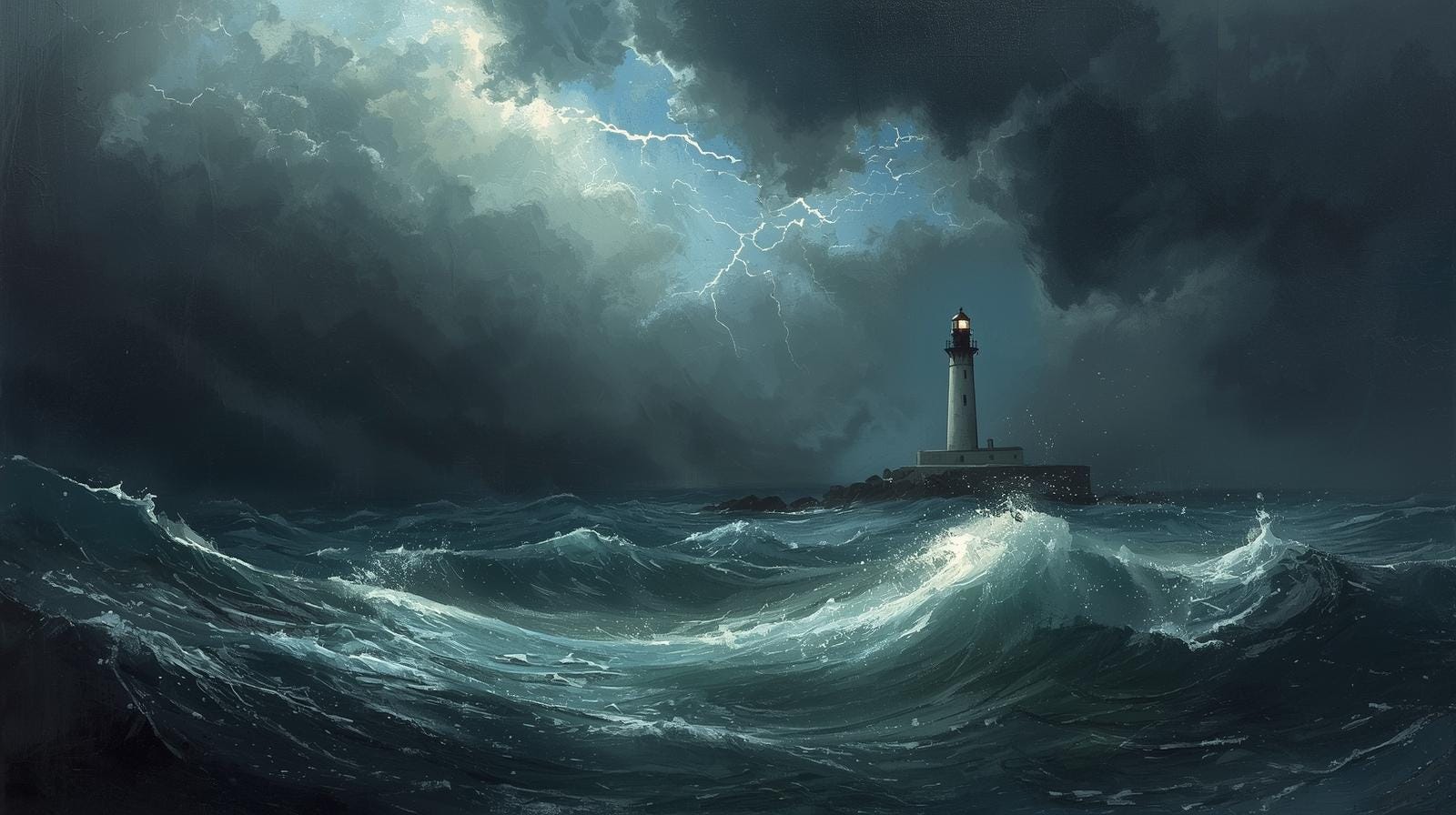
When we accept these duties, our lives’ purpose is fundamentally changed. The course of our ship has changed, and we become ready to undertake the rough waters, the bad storms, and the damage undertaken throughout life. The roughness of life is unavoidable and inevitable, so we might as well look to the things beyond us as a lighthouse to constantly pursue. No matter the storm, the lighthouse pierces all darkness, evil, and struggle. It guides us through it all.
It is the infinite pursuit of the lighthouse that we find the true meaning of life, of personhood, and our purpose of restoring civilization to our world in accordance with the Aether and the world beyond us.